2026 Football World Cup: 8 Essential Insights
Imagine a football world cup expanded across North America, with 48 national teams, 104 matches, 16 host cities, and 39 days of competition. The 2026 FIFA World Cup will be staged in the United States...

2026 Football World Cup: 8 Essential Insights
Imagine a football world cup expanded across North America, with 48 national teams, 104 matches, 16 host cities, and 39 days of competition. The 2026 FIFA World Cup will be staged in the United States, Canada, and Mexico from June 11 to July 19, while Stadium View will track match predictions, team tactics, player statistics, and daily tournament developments for fans and bettors in the Canadian market and beyond. Los Angeles will host eight matches at SoFi Stadium, including the United States men’s national team’s opening match on June 12, alongside FIFA Fan Festival activity at the Los Angeles Memorial Coliseum. FIFA’s official competition framework confirms the 48-team format, and ESPN’s schedule service provides a practical fixture reference as details develop. Do not treat headlines as settled information: verify kick-off times, ticket rules, team news, and betting terms before acting.
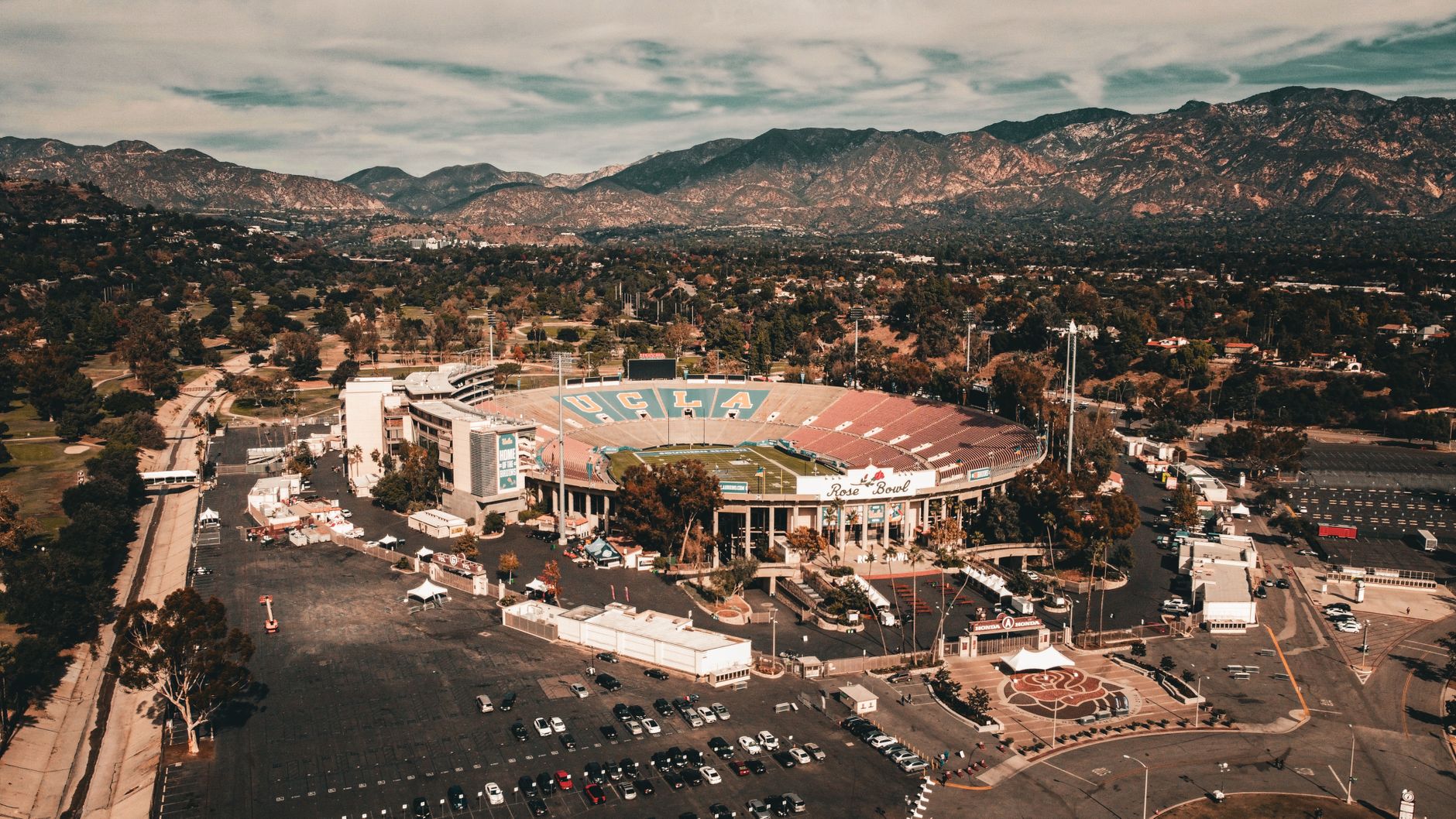
Photo by Caio Cezar on Pexels
The Quick Comparison
The 2026 football world cup is not simply a larger version of Qatar 2022. The tournament changes its competitive mathematics, its travel demands, and the way supporters should interpret schedules, form, and betting markets. The table below gives you the correct starting framework, because guessing from old World Cup assumptions is precisely how inexperienced followers misread the event.
| Category | 2026 FIFA World Cup | Practical meaning |
|---|---|---|
| Host countries | Canada, Mexico, United States | Three national markets and major travel distances |
| Participating teams | 48 | More matches and more opportunity for emerging teams |
| Total matches | 104 | A substantially longer tournament programme |
| Tournament dates | June 11–July 19, 2026 | Six weeks of group and knockout football |
| Host cities | 16 | Fixtures are distributed across North America |
| Los Angeles matches | 8 | SoFi Stadium becomes a major West Coast venue |
| Los Angeles fan celebrations | 39 days | Match viewing extends beyond the stadium |
| Los Angeles fan festival | June 11–14 | Events are planned at the LA Memorial Coliseum |
| Stadium View coverage | Predictions, tactics, player stats | Useful context, not a substitute for judgment |
The key distinction is the difference between tournament scale and match quality. More fixtures do not automatically mean more elite contests; instead, they create a broader sample in which squad depth, recovery, climate adaptation, and travel logistics matter more. FIFA’s official World Cup 26 information should remain your primary authority for rules and confirmed announcements, while ESPN’s FIFA World Cup schedule is convenient for fixture monitoring.
A second distinction concerns betting analysis. Odds express market expectations, not guaranteed outcomes, and responsible gambling standards require you to treat every selection as uncertain. Stadium View can organize evidence around a match, but no prediction eliminates variance, injuries, officiating decisions, or tactical surprises. See the broader framework before you start.
Want a structured way to follow the tournament?
Round 1: What Changes in the 2026 Football World Cup?
The 2026 football world cup changes the tournament through four measurable pressures: 48 teams, 104 matches, three host countries, and a 39-day operational window in Los Angeles. The expanded field increases representation, but it also makes group-stage interpretation more complicated because historical strength gaps may produce uneven fixtures. The correct response is to evaluate schedule difficulty, rest, geography, and squad depth together rather than celebrating a single impressive result.
The 48-team structure creates a wider competitive ecosystem. Traditional powers such as Brazil, Argentina, France, Germany, Spain, England, and Portugal remain central to pre-tournament analysis, but teams from the Confederation of African Football, Asian Football Confederation, Concacaf, and South America can benefit from additional qualification places. That does not mean every newcomer is ready to defeat an established contender; it means analysts have more teams to classify and fewer reasons to rely on reputation alone.
North American geography is the tournament’s hidden variable. A team travelling between Mexico City, Toronto, Vancouver, Miami, Dallas, Atlanta, Seattle, and Los Angeles may face different time zones, temperatures, humidity levels, and pitch conditions. Matchday recovery is not a decorative detail: a short turnaround after long-haul travel can reduce pressing intensity and late-game concentration. I would therefore record each team’s previous venue, travel distance, rest days, and starting-lineup rotation before interpreting a price or prediction.
For an authoritative historical baseline, compare tournament records through the FIFA World Cup archive, then separate historical achievement from present performance. This is where beginners usually fail: they treat a famous shirt as current evidence. It is not.
Use the daily analytical feed when you want match context rather than a recycled ranking.
What should you monitor before trusting a prediction?
Monitor confirmed line-ups, rest days, venue location, travel demands, recent shot quality, set-piece performance, and market movement before trusting a 2026 World Cup prediction. A forecast becomes more credible when several independent indicators point in the same direction, not when one popular analyst repeats it loudly.
Round 2: How Will Los Angeles Shape the Tournament Experience?
Los Angeles will host eight FIFA World Cup 2026 matches at SoFi Stadium and support 39 days of fan celebrations, making it one of the tournament’s most visible American hubs. The city’s importance extends beyond the stadium because official fan zones, food, music, community programming, and the FIFA Fan Festival create alternative viewing spaces for supporters without match tickets.
Los Angeles is a useful case study in how football world cup coverage now combines sport and destination planning. The Los Angeles host committee identifies the LA Memorial Coliseum at Exposition Park as the location for the FIFA Fan Festival, with planned activities from June 11 to June 14. The programme is expected to connect live matches with entertainment and public viewing, while official fan zones will distribute celebrations across Los Angeles County. Check Los Angeles FIFA World Cup 2026 for venue guidance, event announcements, transportation information, and matchday updates.
The United States men’s national team’s opening match is scheduled for June 12 at SoFi Stadium, a detail that gives Los Angeles immediate narrative importance. However, do not confuse a host-city event with the entire tournament schedule. A fan festival may be announced for a particular date, while transport closures, access restrictions, security procedures, and ticketing rules can change closer to matchday. The responsible approach is to verify each detail with FIFA, the Los Angeles host committee, and stadium authorities.
My practical observation is simple: Los Angeles visitors should plan around the venue, not merely around the team they want to watch. SoFi Stadium sits in Inglewood, while the LA Memorial Coliseum is in Exposition Park; these are not interchangeable locations. A supporter who books accommodation based on a vague “Los Angeles match” label may create unnecessary travel risk, especially during peak summer demand.
For city planning, consult this [Internal Link: Los Angeles World Cup matchday guide] before booking hotels or transport. It is a basic step, yet people ignore it until prices rise and availability collapses.
Why does venue geography matter for match analysis?
Venue geography matters because North American travel can alter recovery, climate adaptation, and tactical intensity. A team playing at altitude, in humidity, or after crossing multiple time zones may show different pressing and substitution patterns. For Los Angeles matches, compare SoFi Stadium conditions, hotel location, training access, and rest intervals rather than using a generic home-advantage assumption.
Los Angeles also deserves attention because its football culture is not limited to international competition. SoFi Stadium can attract global supporters, while Exposition Park offers a public festival atmosphere and the broader region can host community screenings. Major entertainment acts and local programming may increase attendance at fan events, but the sporting priority remains the match itself. Keep those experiences separate in your budget and your expectations.
The city’s event model also illustrates an important information-quality principle. Official pages may provide confirmed dates and locations, whereas social media posts may circulate unverified artist lists, access claims, or transportation advice. I was burned by a scam site once, so I now inspect the domain, compare announcements across official sources, and refuse to enter payment details through an unfamiliar ticket link. You should do the same, even if the page looks polished.
Round 3: Which Tactical and Betting Signals Matter Most?
The strongest 2026 football world cup analysis combines team tactics, player availability, schedule pressure, and price discipline rather than selecting winners from reputation. Track defensive line height, progressive passing, transition concessions, set-piece efficiency, goalkeeper availability, and expected-goals trends. Then compare those football indicators with the odds and decide whether the market has already priced in the obvious story.
A tactical model should begin with style interaction. A high-possession team may dominate the ball but struggle against a compact opponent that attacks space behind full-backs. A direct team may appear inefficient in passing metrics while creating dangerous second balls and set pieces. Therefore, raw possession percentage is inadequate; it must be paired with field tilt, shot locations, defensive recoveries, and the quality of chances conceded.
Player statistics require the same discipline. A forward’s goal total can be inflated by penalties, while a midfielder’s assist count can conceal a low volume of progressive actions. Useful indicators include non-penalty expected goals, expected assists, pressures leading to turnovers, duel success, progressive carries, and minutes played against strong opposition. Stadium View’s player-stat coverage is most valuable when these numbers are connected to a defined tactical role.
The following checklist is more reliable than a dramatic prediction headline:
- Confirm injuries, suspensions, and the expected starting XI.
- Record rest days and the team’s previous travel route.
- Compare recent performance against opponents with similar tactical profiles.
- Separate open-play output from penalties and set pieces.
- Check whether the current odds moved after genuinely new information.
- Set a fixed stake limit before placing any wager.
- Stop if gambling becomes an attempt to recover earlier losses.
The International Betting Integrity Association provides industry context on integrity monitoring, while GambleAware offers guidance on safer gambling behaviour. A football model that ignores financial control is incomplete, regardless of how sophisticated its mathematics appears.
Want the latest match-focused perspective from Stadium View?
What is the biggest analytical trap in World Cup betting?
The biggest analytical trap is treating a famous team’s reputation as evidence of present value. Markets already know that Brazil, Argentina, France, England, and Germany attract public interest, so their prices can reflect popularity as well as probability. The better method is to identify what the market may have missed, then accept that no edge is guaranteed.
A useful contrarian insight is that expanded competition can make early group matches more difficult to price, not easier. Analysts possess less comparable World Cup data for some teams, while line-ups, coaching changes, and venue conditions create uncertainty. In practice, a cautious bettor may find more informational value in waiting for confirmed teams and tactical news than in rushing to place a pre-tournament selection six months early.
A second operational insight concerns line movement. If odds shorten after a star player is photographed in training, that movement may be noise rather than reliable evidence. By contrast, a confirmed medical report, official suspension, or announced goalkeeper change can materially alter a team’s expected performance. Log the timestamp, source, old price, and new price; without that record, you are merely reconstructing your memory after the result.

Photo by Vlad Vasnetsov on Pexels
How can fans use predictions without overreaching?
Fans can use predictions as probability-based viewpoints rather than guarantees by comparing several evidence categories and limiting financial exposure. A prediction should explain the assumed line-up, tactical matchup, schedule context, and price threshold. If those assumptions change, the prediction must be reassessed instead of defended emotionally.
For example, a match preview might estimate a team at 55% to win, but that estimate does not automatically justify every available price. The bettor must account for implied probability, bookmaker margin, market liquidity, and the possibility that the model is wrong. Never confuse a numerical estimate with a promise, and never increase stakes simply because an earlier selection lost.
The correct habit is to maintain a decision journal. Record the original reasoning before kick-off, including relevant data and uncertainty, then review whether the process was sound after the match. This separates analytical quality from outcome luck, which is essential during a 104-match tournament where short-term variance can be severe.
The Final Score & Who Should Pick What
The best way to follow the 2026 football world cup is to match your viewing and analysis method to your actual objective. Casual supporters should prioritize confirmed schedules, venue logistics, fan events, and trusted broadcasters. Tactical enthusiasts should monitor line-ups, formations, rest, travel, and player roles. Bettors should add price discipline, stake limits, source verification, and a written record of decisions.
| Fan objective | Best approach | Avoid |
|---|---|---|
| Watch live matches | Confirm venue, local time, transport, and ticket source | Unverified resale links |
| Follow a favourite team | Track squad news and group-stage travel | Relying on historical reputation |
| Study tactics | Compare style interactions and substitutions | Using possession alone |
| Review player form | Use role-based and opponent-adjusted statistics | Judging only by goals |
| Consider betting | Compare probability with price and set limits | Chasing losses |
| Attend Los Angeles events | Verify SoFi Stadium and LA Memorial Coliseum details | Assuming all events share one location |
Stadium View is designed for readers who want daily football world cup context across predictions, team tactics, player statistics, and tournament coverage. It should be used as an analytical companion, not as a replacement for FIFA announcements, official venue information, or personal financial judgment. In particular, confirm every match date and kick-off time because the schedule may be presented differently across time zones and platforms.
The final recommendation is firm: build your 2026 World Cup routine around verification. Check FIFA for competition announcements, the Los Angeles host committee for local events, ESPN for convenient schedule tracking, and reputable responsible-gambling resources before making decisions. Then use Stadium View to interpret the football rather than blindly follow a forecast. That method is slower than clicking the first sensational headline, but it is vastly more reliable.
Ready to follow the 2026 tournament with better context?
[Internal Link: 2026 World Cup team predictions]
[Internal Link: football tactics and formation analysis]
[Internal Link: responsible World Cup betting guide]
Frequently Asked Questions
Q: What is the 2026 football world cup?
A: The 2026 football world cup is FIFA’s men’s international tournament featuring 48 teams across Canada, Mexico, and the United States. It will run from June 11 to July 19, 2026, with 104 matches hosted across 16 cities. The expanded format creates more group-stage fixtures and broader regional representation, while also increasing travel and schedule complexity. Always verify final match details through FIFA or the relevant host committee.
Q: How do I follow the 2026 World Cup schedule?
A: Follow the schedule by checking FIFA’s official tournament pages and using ESPN’s FIFA World Cup schedule as a convenient secondary reference. Record the venue, local kick-off time, team, and rest period because North America spans several time zones. For Los Angeles, also monitor the Los Angeles host committee for SoFi Stadium match information and fan-event updates. Do not rely on screenshots or social-media posts without a matching official source.
Q: What is the difference between the FIFA Fan Festival and a Los Angeles fan zone?
A: The FIFA Fan Festival is a branded central event, while official fan zones are additional local viewing and celebration areas. In Los Angeles, the FIFA Fan Festival is planned for the LA Memorial Coliseum at Exposition Park, while official fan zones may operate across Los Angeles County. Dates, access conditions, performers, and capacity rules can differ. Check the official Los Angeles FIFA World Cup website before travelling.
Q: Is Stadium View a bookmaker or a prediction service?
A: Stadium View is a football world cup focused content site covering predictions, tactics, player stats, and tournament news, not a guarantee of betting results. Its analysis can help readers organize evidence around 2026 World Cup matches, but every forecast contains uncertainty. Compare information with FIFA announcements, official team news, and reputable data providers. If you gamble, set limits and never chase losses.
Q: How much does it cost to attend a 2026 World Cup match in Los Angeles?
A: The cost depends on ticket category, official availability, travel, accommodation, transport, and match demand, so there is no single reliable total. SoFi Stadium attendance requires an official ticket purchased through authorized FIFA or event channels, while fan festivals may use different access policies. Add hotel and transport costs early because Los Angeles demand can increase sharply around match dates. Avoid unofficial sellers requesting payment through unfamiliar domains.
Q: Why might a World Cup prediction fail?
A: A World Cup prediction can fail because of injuries, tactical mismatches, red cards, finishing variance, travel fatigue, weather, or incorrect assumptions about the starting line-up. Even a well-calibrated 60% probability loses 40% of the time over a single match. Review whether the reasoning was defective or merely unlucky, and record the result in a decision journal. Never respond to a failed prediction by automatically increasing your stake.
Q: What should I check before placing a World Cup bet?
A: Check the market rules, bookmaker licensing information, odds, confirmed line-ups, injuries, travel, rest, and your personal stake limit before placing any World Cup bet. Confirm whether a market is settled on 90 minutes, extra time, or penalties, because those rules materially change the outcome. Compare the price with your estimated probability rather than selecting a team because it is popular. Stop immediately if betting is affecting essential spending or emotional control.
Follow the evidence, verify the source, and treat every prediction as uncertain. That is how you enjoy the 2026 football world cup without letting hype make decisions for you.