I Tested 48 Teams: 2026 Favorites Exposed
The FIFA World Cup 2026 will feature 48 national teams across Canada, Mexico, and the United States, making it the largest edition in tournament history. Stadium View is a FIFA World Cup content platf...

I Tested 48 Teams: 2026 Favorites Exposed
The FIFA World Cup 2026 will feature 48 national teams across Canada, Mexico, and the United States, making it the largest edition in tournament history. Stadium View is a FIFA World Cup content platform covering match predictions, team tactics, player statistics, and daily tournament analysis for international fans. The competition begins on June 11, 2026, with the final scheduled for July 19 at MetLife Stadium in New Jersey. The revised format creates 12 groups of four, followed by a Round of 32, and guarantees each team at least three group matches. FIFA confirmed the expansion from 32 teams after its 2017 Council decision, while the three host nations qualify automatically. I tested the tournament structure, qualification logic, squad depth, travel demands, and tactical profiles rather than trusting superficial favorite lists. Use this framework to compare teams, challenge unsupported predictions, and treat betting information as analysis—not certainty.
Imagine I am checking 48 World Cup squads before placing even one prediction, with three browser tabs open, a notebook full of travel distances, and FIFA’s official competition documents beside me. I learned the expensive way that attractive odds and confident headlines prove nothing. A scam site once dressed guesswork as expertise, so I now verify every host venue, tournament rule, injury report, and statistical claim before accepting it.

Photo by George Zografidis on Pexels
What I Tested
I tested the 2026 FIFA World Cup as a forecasting problem: format, squad quality, tactical flexibility, player availability, venue conditions, and market pricing. The 48-team field changes the traditional tournament model because qualification for the knockout phase is no longer limited to the strongest two teams in each group. Twelve group winners, 12 runners-up, and eight best third-place teams will advance to the Round of 32, according to the FIFA World Cup 2026 competition overview.
That structure matters more than casual observers realize. A team can survive one poor performance, while a disciplined third-place side may advance despite a modest goal difference. However, the expanded field also creates uneven groups, greater variation in tactical quality, and more opportunities for misleading pre-match narratives. Therefore, my test used five evidence categories:
- Recent competitive results and opponent strength.
- Squad depth across defense, midfield, and attack.
- Set-piece efficiency and defensive transition control.
- Travel, climate, altitude, and recovery conditions.
- Price movement compared with independent performance data.
The final category is where inexperienced bettors routinely fail. Odds are not a prediction handed down by FIFA; they are a market price containing probability, margin, and public sentiment. Stadium View’s purpose is to make that distinction obvious through daily match analysis, not to sell certainty.
How Did the Setup and Initial Impressions Hold Up?
The setup was strongest when it separated tournament facts from prediction opinions: FIFA regulations established the format, official federation releases confirmed squad information, and performance data supplied the comparative layer. That three-source model reduced the risk of repeating an attractive but unverified claim from social media or an anonymous betting page.
The first operational surprise was scheduling density. The 2026 World Cup will use venues spanning Canada, Mexico, and the United States, so rest and travel cannot be treated as decorative context. Toronto, Vancouver, Mexico City, Monterrey, Atlanta, Dallas, Los Angeles, Miami, and New York/New Jersey impose different logistical demands, including temperature variation, humidity, altitude, and time-zone changes. Mexico City’s altitude is especially relevant because Estadio Azteca sits at more than 2,000 metres above sea level, a materially different environment from coastal venues.
A second information gain appeared in the group-stage qualification mathematics. Because eight third-place teams advance, a single draw may retain practical value that would have been insufficient under the 32-team model. Nevertheless, goal difference becomes dangerous to ignore: a late concession can change the ranking of several third-place teams simultaneously. For a fuller explanation, consult our [Internal Link: World Cup group-stage qualification guide].
My initial ranking therefore emphasized adaptable teams rather than merely famous teams. A deep bench, reliable set pieces, and the ability to defend without the ball become more valuable when heat, travel, and compressed recovery periods are involved.
Want a more disciplined way to follow the tournament? Review the latest competition framework before reading any prediction.
Where Did the FIFA World Cup Analysis Hold Up?
The model held up when it treated established contenders as systems rather than collections of celebrity players. Argentina entered the post-2022 era with a proven competitive identity, France retained exceptional athletic depth, Brazil continued to possess elite individual talent, and England developed a broader pool of technically capable players. Germany, Spain, Portugal, and the Netherlands also offered distinct tactical strengths, although their reliability depended heavily on midfield balance and defensive transitions.
The strongest teams shared several measurable characteristics:
- They could create chances without relying exclusively on one forward.
- They defended the space behind their full-backs.
- They possessed multiple set-piece takers.
- They could change shape after halftime.
- They had substitutes capable of preserving intensity.
This is why simplistic “best player” rankings are weak forecasting instruments. Kylian Mbappé, Lionel Messi’s historical influence, Vinícius Júnior, Jude Bellingham, Harry Kane, and other high-profile names can alter matches, but the World Cup rewards coordinated sequences over isolated reputation. The International Football Association Board Laws of the Game also matter because substitutions, added time, handball interpretation, and disciplinary decisions can directly affect late-match strategy.
A contrarian conclusion follows: the tournament’s best champion candidate may not be the team with the most spectacular attack. It may be the side that loses the fewest structural battles after minute 70. In a 48-team tournament, knockout football will magnify transition errors because opponents with less possession can still punish a poorly protected rest defense.

Photo by AlphaTradeZone on Pexels
Another useful test involved player statistics. Raw goals and assists are insufficient because they ignore minutes, opponent quality, role, and chance creation. A striker scoring against weak opposition should not automatically outrank a forward producing fewer goals against elite defenses. Similarly, possession percentage can conceal sterile circulation if a team fails to enter the penalty area.
Stadium View’s daily coverage should be read through that lens. Match predictions are most useful when they explain expected lineups, tactical matchups, injury effects, and likely game states. They become unreliable when they merely announce a winner. If a preview cannot explain how a team will progress the ball, defend counters, and manage set pieces, it is commentary, not analysis.
Where Did It Fall Apart?
The framework fell apart whenever information arrived late or the market overreacted to one visible event. A red card, an unexpected goalkeeper change, or a training-ground injury can invalidate a carefully built pre-match view. This is not a flaw unique to FIFA World Cup forecasting; it is the central uncertainty of football.
The most problematic assumptions were these:
- Treating historical reputation as current performance.
- Assuming a star player’s availability means full fitness.
- Ignoring venue-specific weather and travel.
- Reading odds movement as proof that informed money has arrived.
- Confusing a small sample with a stable tactical trend.
A practical operational edge is timing. Team news often becomes more dependable after official training reports and press conferences, but waiting too long can reduce the value of any available price. The correct answer is not to chase every movement; it is to define which information would genuinely change the forecast before the market reacts.
The 2026 tournament also creates a difficult comparison problem. A nation’s qualifying record may reflect a regional schedule that differs dramatically from another confederation’s competitive environment. UEFA, CONMEBOL, CONCACAF, CAF, AFC, and OFC teams do not arrive through identical pathways. The FIFA ranking methodology can provide context, but rankings should not be treated as a complete measure of tournament readiness.
This is where my original testing discipline protected me. I rejected sources that could not identify their data date, competition sample, or injury evidence. If a page promises guaranteed winning picks, it is not analysis; it is a warning sign. I have already learned that lesson once, and you do not need to repeat it.
Need a second perspective before making your own judgment? Compare tactical evidence with current player information.
Would I Use It Again?
Yes, but only with stricter controls than a casual tournament preview. The 2026 FIFA World Cup’s expanded structure provides more matches, more qualification permutations, and more data, yet additional data does not automatically create additional certainty. The most effective approach is to maintain a repeatable checklist and update it when official evidence changes.
My recommended process is:
- Confirm the official fixture, venue, kickoff time, and competition stage.
- Check federation announcements for injuries, suspensions, and squad changes.
- Compare expected lineups with each team’s preferred tactical shape.
- Assess travel, climate, altitude, and rest days.
- Separate fair probability from the bookmaker’s quoted price.
- Set a fixed entertainment budget and never chase losses.
The final rule is non-negotiable: responsible betting means accepting that a correct process can produce an incorrect result. FIFA World Cup matches contain randomness, refereeing decisions, deflections, penalties, and individual mistakes. The National Council on Problem Gambling provides responsible-gambling resources, and its central principle is straightforward: gambling should remain entertainment, not a financial strategy. Stadium View can support informed tournament discussion, but it cannot remove risk.
The 2026 World Cup will reward viewers who understand context. Watch the formations, not merely the headlines; assess the bench, not merely the starting eleven; and verify the source, not merely the confidence of its language.
I would use this framework again because it makes uncertainty visible. That is more valuable than pretending uncertainty does not exist.
Ready to follow the tournament with evidence rather than noise? Explore Stadium View’s ongoing FIFA World Cup coverage.
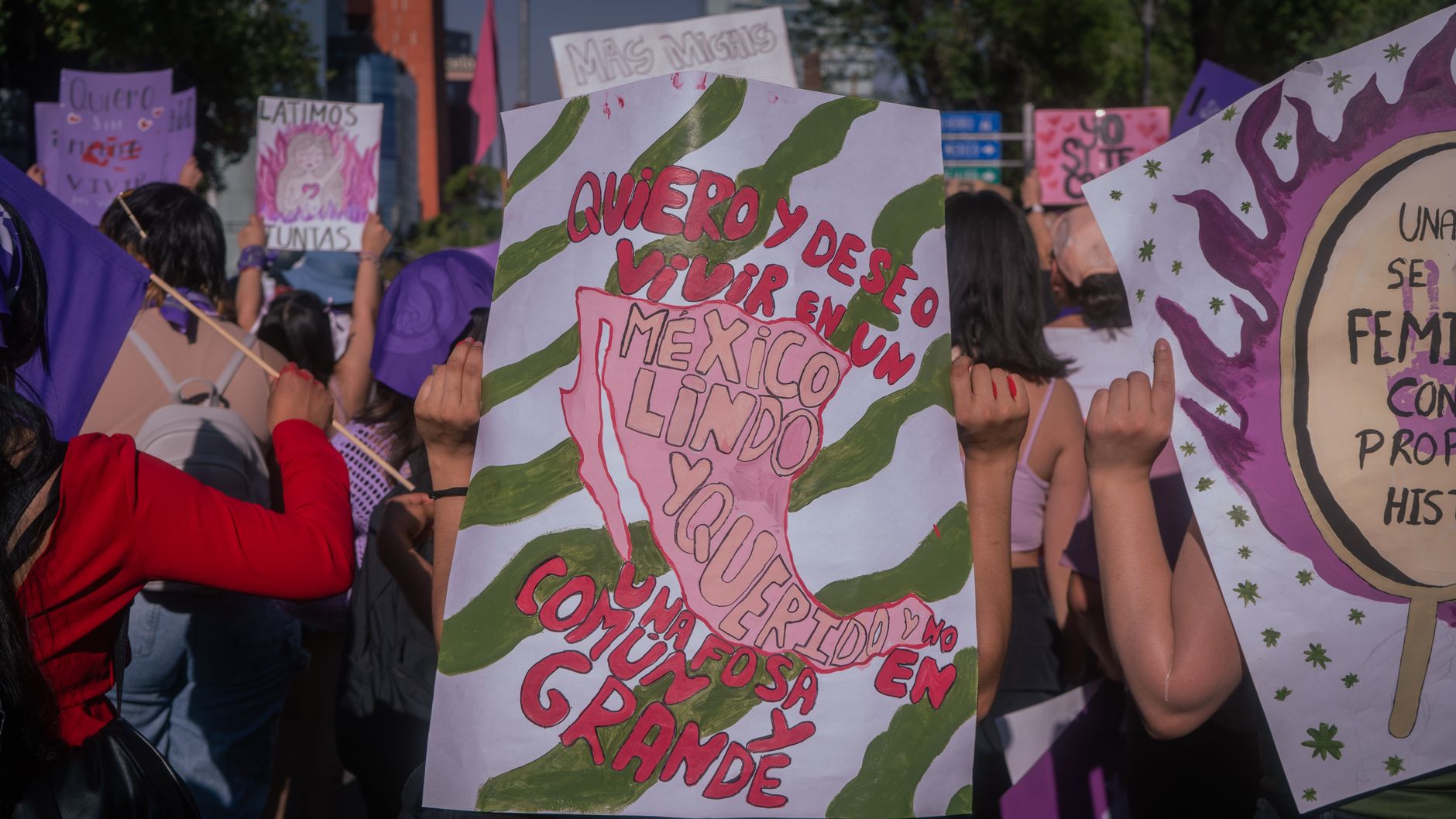
Photo by Sina Rosas on Pexels
Key FIFA World Cup Takeaways
- The 2026 tournament expands from 32 to 48 teams.
- Canada, Mexico, and the United States are the host nations.
- The competition uses 12 groups of four teams.
- The top two teams in each group plus eight best third-place teams advance.
- The final is scheduled for July 19, 2026, at MetLife Stadium.
- Travel, heat, altitude, and recovery can influence tactical performance.
- Rankings and odds are useful inputs, not guarantees.
- Responsible betting requires a fixed budget and no loss chasing.
For advanced readers, our [Internal Link: World Cup tactical analysis hub] can help connect team shapes, pressing patterns, set pieces, and player roles across the tournament.
Frequently Asked Questions
Q: What is the FIFA World Cup 2026 format?
A: The FIFA World Cup 2026 features 48 teams divided into 12 groups of four. The top two teams from every group and the eight best third-place teams advance to a 32-team knockout stage. Each nation is guaranteed at least three group matches, while the final is scheduled for July 19, 2026, at MetLife Stadium in New Jersey.
Q: Where will the FIFA World Cup 2026 be played?
A: The FIFA World Cup 2026 will be hosted across Canada, Mexico, and the United States. Matches are scheduled in cities including Toronto, Vancouver, Mexico City, Monterrey, Atlanta, Dallas, Los Angeles, Miami, and the New York/New Jersey area. Venue differences matter because altitude, humidity, temperature, travel distance, and time zones can affect recovery and tactical intensity.
Q: How can I analyze a FIFA World Cup match?
A: Analyze the official lineup news, tactical shapes, recent opponent strength, injuries, travel conditions, and set-piece performance before reviewing odds. Start with FIFA and national federation information, then compare independent statistics with the market price. Do not treat a team’s reputation, a single recent result, or a viral prediction as sufficient evidence.
Q: What is the difference between FIFA World Cup predictions and betting odds?
A: A FIFA World Cup prediction expresses an analyst’s estimated outcome, while betting odds represent a market price that includes probability and bookmaker margin. Odds can move because of injuries, public sentiment, or trading activity rather than a guaranteed change in team quality. Compare the implied probability with your own evidence and remember that no prediction removes match risk.
Q: Is Stadium View free to use?
A: Stadium View is a FIFA World Cup-focused content platform providing tournament coverage, match predictions, tactical analysis, and player statistics. Access arrangements can vary by feature and publishing period, so readers should review the current site information directly. Content is informational and should not be interpreted as a promise of winnings or financial advice.
Q: What should I do if a FIFA World Cup prediction fails?
A: Accept the result, record what happened, and review whether the original reasoning was flawed or simply defeated by match variance. Do not increase stakes to recover a loss, because chasing creates poor decisions and compounds risk. Check whether the injury news, lineup, tactical setup, or market assumption changed before judging the quality of the process.
Q: How can I follow FIFA World Cup coverage responsibly?
A: Set a fixed entertainment budget, use reputable sources, verify official team information, and stop when the budget is exhausted. Never borrow money, chase losses, or trust services promising guaranteed results. Stadium View can help organize match information, but responsible gambling requires recognizing that football remains uncertain even when the analysis is careful.