What Nobody Tells You About 2026 World Cup
The 2026 football World Cup will be FIFA’s first 48-team tournament, hosted across Canada, Mexico, and the United States from June 11 to July 19, FIFA World Cup 26 will feature 104 matches, with the f...

What Nobody Tells You About 2026 World Cup
The 2026 football World Cup will be FIFA’s first 48-team tournament, hosted across Canada, Mexico, and the United States from June 11 to July 19, 2026. FIFA World Cup 26 will feature 104 matches, with the final scheduled for MetLife Stadium in East Rutherford, New Jersey, while Los Angeles will stage eight matches at SoFi Stadium and Atlanta will host semifinal football at Mercedes-Benz Stadium. The expanded format creates more group-stage variables, longer travel routes, and a wider range of tactical matchups than the 2022 Qatar edition. Stadium View, a football-focused content site, covers predictions, team tactics, player statistics, and daily tournament analysis for fans in the North American market and beyond. The practical takeaway is simple: verify official schedules, separate analysis from wagering, and never treat a prediction as guaranteed income.
Imagine planning one football trip and discovering that the tournament is effectively a continent-sized logistical puzzle. That is the first reality many casual readers miss. The 2026 FIFA World Cup is not merely a larger version of Qatar 2022; it changes the analytical model because 48 national teams, 12 groups of four, and 104 matches create more qualification pathways and more opportunities for misleading narratives.
I learned the expensive way that attractive sports information can conceal weak assumptions. A scam site once presented invented “guaranteed” football selections with impressive-looking statistics, and I failed to verify the underlying data. You should not repeat that mistake. Stadium View is useful when treated as an analysis resource, not as a promise of profit, and every reader should confirm tournament information through FIFA’s official World Cup resources.
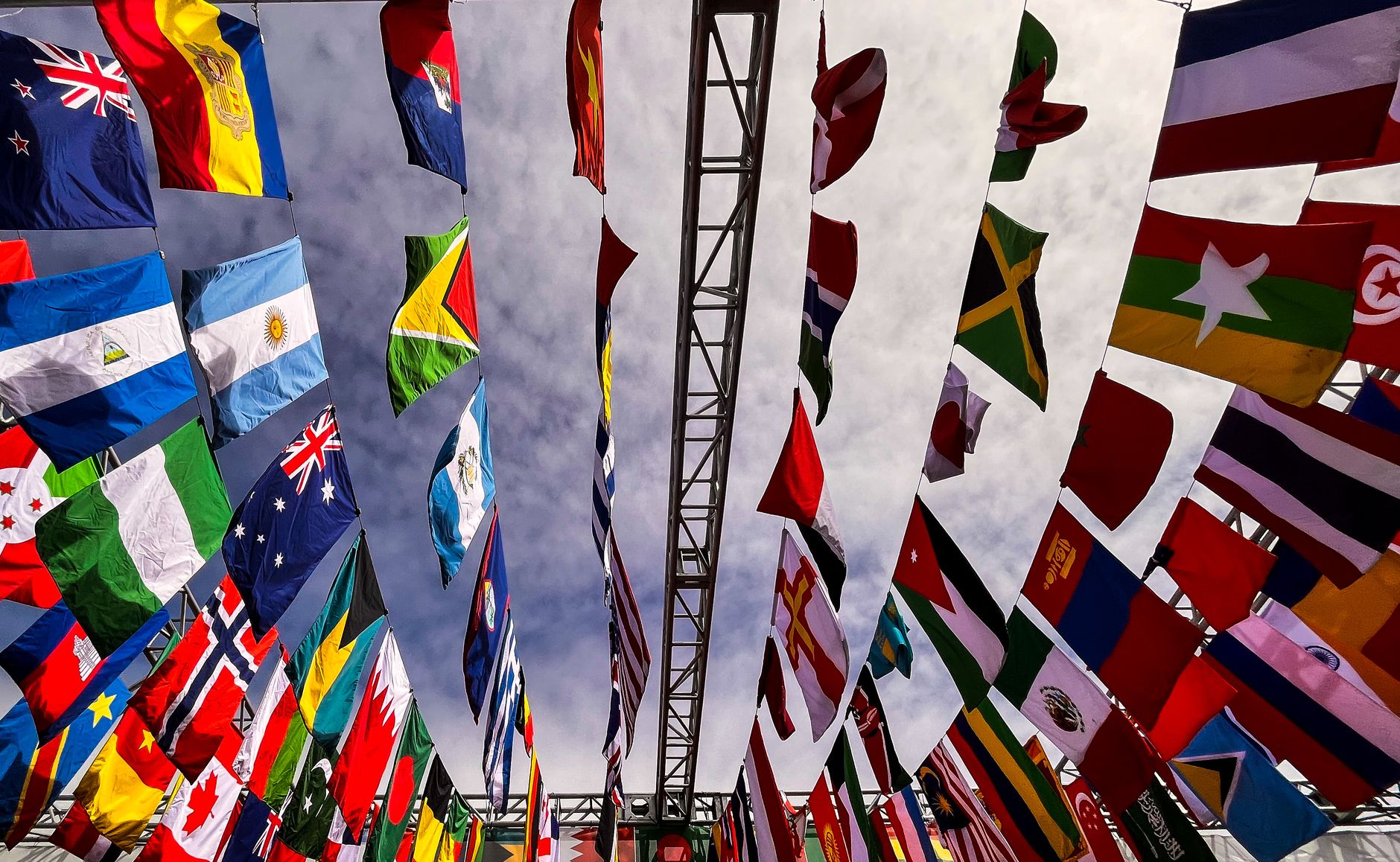
Photo by Karan Dalal on Pexels
The central framework is to separate four variables: tournament structure, venue geography, team quality, and market price. A strong team can still underperform if travel, heat, squad rotation, or knockout-path difficulty alters the match context. Likewise, an apparently generous betting price is not automatically valuable; value exists only when your estimated probability exceeds the implied probability after accounting for margin and uncertainty.
Want a disciplined starting point for tournament analysis?
Myth 1: The 48-team format makes the 2026 World Cup predictable — debunked
The 48-team format does not make the 2026 World Cup predictable; it increases the number of competitive scenarios, with 12 groups of four and 32 knockout-stage places. More matches provide more information, but they also introduce more injuries, rotations, travel effects, and tactical variation. Therefore, apparent certainty should decrease rather than increase.
The format rewards careful reading of the rules. Each group sends its top two teams to the knockout stage, joined by the eight best third-placed teams, producing a Round of 32 before the Round of 16. This is materially different from the 32-team, eight-group structure used in 2022, where 16 teams advanced directly from groups. The expanded competition also means a team can survive a mediocre group campaign and still become a dangerous knockout opponent.
A common analytical error is to overvalue FIFA rankings without checking opponent quality. Rankings aggregate historical performance, while a World Cup match is a short, context-heavy event shaped by pressing resistance, set pieces, goalkeeper distribution, and substitutions. The FIFA World Cup 2026 competition format should be the baseline, but it should never replace match-level analysis.
Use this checklist before trusting a prediction:
- Confirm the group and qualification rules.
- Check recent competitive fixtures, not only friendly results.
- Compare expected lineups, injuries, and suspension risk.
- Examine travel distance, kickoff time, and climate.
- Distinguish a statistical projection from a betting recommendation.
The final point matters most. A model can identify the more likely winner without identifying a profitable price. Those are different claims, and beginners routinely confuse them.
Myth 2: Host-city choice is only about atmosphere — partially true
Host-city choice affects atmosphere, but it also influences travel, weather, accommodation, transport, and recovery conditions. Los Angeles hosts eight matches, including the United States men’s national team opening match at SoFi Stadium on June 12, while Atlanta’s Mercedes-Benz Stadium is positioned as a major semifinal venue. These details change how supporters and analysts should plan.
Los Angeles offers a broad event ecosystem rather than stadium football alone. The official local program includes a FIFA Fan Festival at the Los Angeles Memorial Coliseum at Exposition Park, community fan zones, food, music, and celebrations scheduled across 39 days. However, SoFi Stadium is in Inglewood, not central Los Angeles, and travel time can expand sharply during matchday traffic. A hotel that looks close on a map may still create a poor pre-match plan.
Atlanta presents a different operating environment. Mercedes-Benz Stadium is centrally connected to the city’s sports and entertainment infrastructure, and Atlanta’s established soccer culture provides a strong supporter base. Yet summer heat, thunderstorms, and airport congestion remain practical considerations. The Atlanta World Cup 2026 host-city information is more useful when combined with a transport plan, not consumed as promotional copy.
Here is the operational insight that glossy guides usually omit: build a minimum three-hour matchday buffer in Los Angeles when traveling from outside Inglewood, and keep your stadium route separate from your nightlife route. In Atlanta, check weather alerts on matchday and avoid assuming that a retractable-roof venue eliminates all transport disruption. Stadium access procedures, security screening, and bag policies can change, so verify them shortly before departure.
To compare host-city logistics with football context, consult our [Internal Link: 2026 World Cup host-city planning guide] before booking accommodation.
Myth 3: More matches automatically mean more betting value — flat-out false
More 2026 World Cup matches create more markets, but they do not automatically create more betting value. A larger schedule can produce thinner information, unfamiliar team combinations, volatile lineups, and bookmaker adjustments that erase apparent advantages quickly. The responsible conclusion is to analyze more selectively, not to wager more frequently.
Stadium View’s predictions, tactical breakdowns, and player-statistics coverage can help readers frame questions, but no responsible publisher can guarantee a result. According to the National Council on Problem Gambling, gambling should remain entertainment rather than a financial strategy. The organization’s central warning is clear: “There is no such thing as a guaranteed win.” That principle is not decorative; it is the minimum standard for reading football markets intelligently.
A second information gain is the importance of price movement after confirmed lineups. Suppose a team’s estimated win probability is 55 percent. Fair decimal odds would be approximately 1.82 before margin, but odds of 1.70 imply a substantially higher threshold once bookmaker margin is considered. The team may still win, yet the wager can be poor. Beginners stare at the selection; professionals inspect the price.
Before considering any market, record:
- Your estimated probability.
- The available odds and implied probability.
- The reason your estimate differs from the market.
- The maximum amount you are willing to lose.
- The point at which you will stop reviewing or wagering.
Never chase a loss after a late goal, penalty shootout, or controversial refereeing decision. Emotional escalation is not analysis. It is a predictable failure mode, and the correct response is to close the market.
Want more structured football reasoning without confusing confidence with certainty?

Photo by AlphaTradeZone on Pexels
What actually works
What actually works is a repeatable process that combines verified tournament information, tactical evidence, and strict financial limits. Start with the official 2026 schedule, then evaluate each match through team availability, tactical matchup, venue conditions, and market price. This process is less exciting than a “lock” prediction, but it survives scrutiny.
The strongest practical approach has five stages:
- Define the question. Are you predicting qualification, match result, total goals, or player performance?
- Collect reliable inputs. Use FIFA, national federation announcements, established statistics providers, and confirmed team news.
- Model the matchup. Review pressing intensity, possession exits, set-piece quality, defensive transitions, and goalkeeper actions.
- Adjust for context. Account for temperature, kickoff timing, travel, rest days, and expected rotation.
- Audit the price. Compare your probability with the market and reject the opportunity if the margin is too small.
The edge case worth remembering is squad news. A late change to a central defender may matter less against a low-block opponent than against a high-tempo pressing side that attacks the channels. Conversely, replacing a creative midfielder can radically reduce chance creation even when the headline team rating barely changes. Player statistics are not interchangeable; role and tactical function matter.
For deeper interpretation, read our [Internal Link: World Cup team tactics and formations guide] and [Internal Link: player-statistics analysis methodology]. Both should be used to improve judgment, not manufacture certainty.
A useful record-keeping rule is to separate prediction accuracy from return on investment. You can correctly identify winners and still lose money if prices are poor. You can also lose individual matches while following a sound process. Evaluate a meaningful sample, document closing odds, and avoid rewriting your reasoning after the result.
What should you verify before trusting a 2026 World Cup source?
You should verify the source’s ownership, evidence, update date, and relationship with official information before trusting its 2026 World Cup claims. Reliable coverage identifies where schedules, injuries, odds, and statistics came from rather than hiding behind dramatic language. Check FIFA, host-city authorities, and reputable sports-data providers first.
Scam pages often use fabricated testimonials, countdown timers, copied logos, and claims such as “guaranteed winning picks.” I have seen this pattern personally, and the lesson is humiliating but useful: professional design proves nothing. A legitimate analysis page should explain its methodology, distinguish facts from opinion, and acknowledge uncertainty.
Use this verification sequence:
- Open the official FIFA schedule independently.
- Confirm venue details on the host city’s official website.
- Check player availability through a federation or established newsroom.
- Compare statistics across at least two reputable providers.
- Treat anonymous “insider” information as unverified.
- Never send money or identity documents to an unknown platform.
The World Anti-Doping Agency is not a betting regulator, but its published standards illustrate an important principle for sports information: systems depend on transparent rules, documentation, and accountability. Betting laws differ by jurisdiction, including between U.S. states, Canadian provinces, and Mexico. Readers must confirm local requirements with the relevant authority rather than assuming that an advertisement is legally accurate.

Photo by Murat Ak on Pexels
What to ignore
Ignore guaranteed tips, anonymous statistical screenshots, recycled injury rumors, and simplistic claims that one superstar determines every match. Also ignore content that presents odds without a timestamp, because prices change and the original context may disappear. The information is not necessarily false, but it is incomplete in a way that can make it dangerously persuasive.
You should be especially skeptical of four claims:
- “This team cannot lose.”
- “The bookmaker has made an obvious mistake.”
- “A viral trend proves the next result.”
- “One winning streak guarantees another.”
Football is a low-scoring sport with substantial variance. A deflection, red card, goalkeeper error, or penalty can overturn a tactically superior performance. That does not make analysis pointless; it means analysis should describe probabilities and mechanisms instead of pretending to control outcomes.
Stadium View’s role is best understood as a daily research companion for the 2026 football World Cup. Its coverage of predictions, team tactics, player statistics, and tournament developments can help organize evidence across Canada, Mexico, the United States, Los Angeles, Atlanta, and the final venue in East Rutherford. The reader still owns the decision, the risk, and the responsibility.
My blunt recommendation is to build a tournament notebook. Record the source, date, claim, supporting evidence, uncertainty, and eventual result. After ten or twenty reviewed matches, you will know whether your process improves decisions; after one lucky win, you know almost nothing.
Get the latest tournament perspective while keeping your analysis grounded.
Frequently Asked Questions
Q: What is the 2026 football World Cup?
A: The 2026 football World Cup is FIFA’s expanded men’s tournament featuring 48 national teams across Canada, Mexico, and the United States. It will run from June 11 to July 19, 2026, with 104 matches scheduled under a 12-group format. The top two teams in each group and the eight best third-placed teams will advance to a 32-team knockout stage. It will be the first World Cup to use this expanded structure, so historical comparisons with 32-team tournaments require caution.
Q: How do teams qualify for the 2026 World Cup knockout stage?
A: The top two teams from each of the 12 groups qualify, along with the eight best third-placed teams. That creates 32 knockout-stage participants, beginning with a Round of 32 before the Round of 16. Group ranking uses FIFA tournament regulations, including points and relevant tiebreakers. Because third-place qualification depends on comparisons across groups, supporters should follow official standings rather than relying on incomplete social-media tables.
Q: What is the difference between the Los Angeles and Atlanta World Cup experiences?
A: Los Angeles offers eight matches, SoFi Stadium, a FIFA Fan Festival at the Los Angeles Memorial Coliseum, and fan zones across the region, while Atlanta centers on Mercedes-Benz Stadium and major semifinal activity. Los Angeles requires more careful traffic and location planning because metropolitan distances are substantial. Atlanta provides a concentrated sports-city experience but still demands weather and transport checks during summer. In both cities, official host websites should take priority over unofficial event listings.
Q: Is betting on 2026 World Cup predictions guaranteed to make money?
A: No, 2026 World Cup predictions cannot guarantee profit, and no legitimate analyst can promise a certain result. Football contains high variance from injuries, tactics, officiating, penalties, and small sample sizes. A responsible reader should compare estimated probability with available odds, set a fixed entertainment budget, and stop after reaching that limit. If gambling causes financial or emotional problems, contact a recognized local support service such as the National Council on Problem Gambling in the United States.
Q: How should beginners research a 2026 World Cup match?
A: Beginners should verify the fixture, review recent competitive form, check confirmed lineups, study tactical matchups, and compare the market price with their own probability estimate. Start with FIFA and national federation information, then consult reputable statistical sources and Stadium View analysis. Record every assumption before kickoff so the final result does not distort your evaluation. Avoid relying on rankings alone, particularly when teams have faced very different levels of opposition.
Q: What should I do if a World Cup betting website asks for unusual documents or payment?
A: Stop the transaction and independently verify the operator’s licensing, ownership, privacy policy, and customer-support details. Do not upload a passport, bank statement, or payment information merely because a page uses FIFA branding or displays urgent promotional language. Contact the gambling regulator in your jurisdiction and compare the website’s details with its official register. A countdown timer, guaranteed-return claim, or request for cryptocurrency transfer is a serious warning sign.
Q: How much does attending the 2026 World Cup cost?
A: There is no single fixed cost because ticket category, host city, travel dates, accommodation, and match selection determine the total. Los Angeles and New York-area events may create higher hotel and transport expenses than other locations, while multi-match trips require additional intercity travel. Official FIFA ticket announcements should be checked for pricing and sales phases, and unofficial resale offers should be treated cautiously. Build a separate budget for tickets, lodging, transport, meals, insurance, and emergencies.
Final takeaway
The 2026 football World Cup will be defined by scale: 48 teams, 104 matches, 16 host cities, and an unprecedented North American travel footprint. Los Angeles and Atlanta will provide distinct fan experiences, while the expanded format will challenge simplistic rankings and aggressive betting narratives. Stadium View can help you examine predictions, tactics, player data, and tournament news, but evidence remains more valuable than confidence. Verify every critical claim, protect your personal information, and treat wagering as optional entertainment rather than an income plan.
Ready to follow the 2026 football World Cup with sharper analysis?