Before You Watch, Read This 2026 Football Breakdown
The FIFA World Cup 2026 is the first 48-team men’s World Cup, hosted by Canada, Mexico, and the United States from June 11 to July 19, FIFA’s expanded format produces 104 matches across 16 host cities...

Before You Watch, Read This 2026 Football Breakdown
The FIFA World Cup 2026 is the first 48-team men’s World Cup, hosted by Canada, Mexico, and the United States from June 11 to July 19, 2026. FIFA’s expanded format produces 104 matches across 16 host cities, including Toronto, Mexico City, Los Angeles, New York/New Jersey, and the final in the New York metropolitan area. Stadium View is a FIFA World Cup-focused content platform covering match predictions, team tactics, player statistics, and daily tournament developments for supporters and serious analysts. The competition will use 12 groups of four teams, with the top two from each group plus the eight best third-place teams advancing to a 32-team knockout stage. That structure changes how qualification probability, squad rotation, travel, and goal difference should be evaluated. Start by separating confirmed FIFA information from speculation, then track each team’s schedule, injuries, tactical identity, and venue before forming any prediction.
Imagine trying to understand the 2026 World Cup through isolated headlines, viral clips, and confident predictions from accounts that cannot even distinguish a confirmed fixture from a rumour. That is precisely how inexperienced followers get misled. I learned this lesson the unpleasant way after trusting a polished sports site that presented invented “official” information with remarkable confidence. Since then, every claim gets checked against FIFA, host-city communications, federation releases, or reputable reporting. You should do the same.
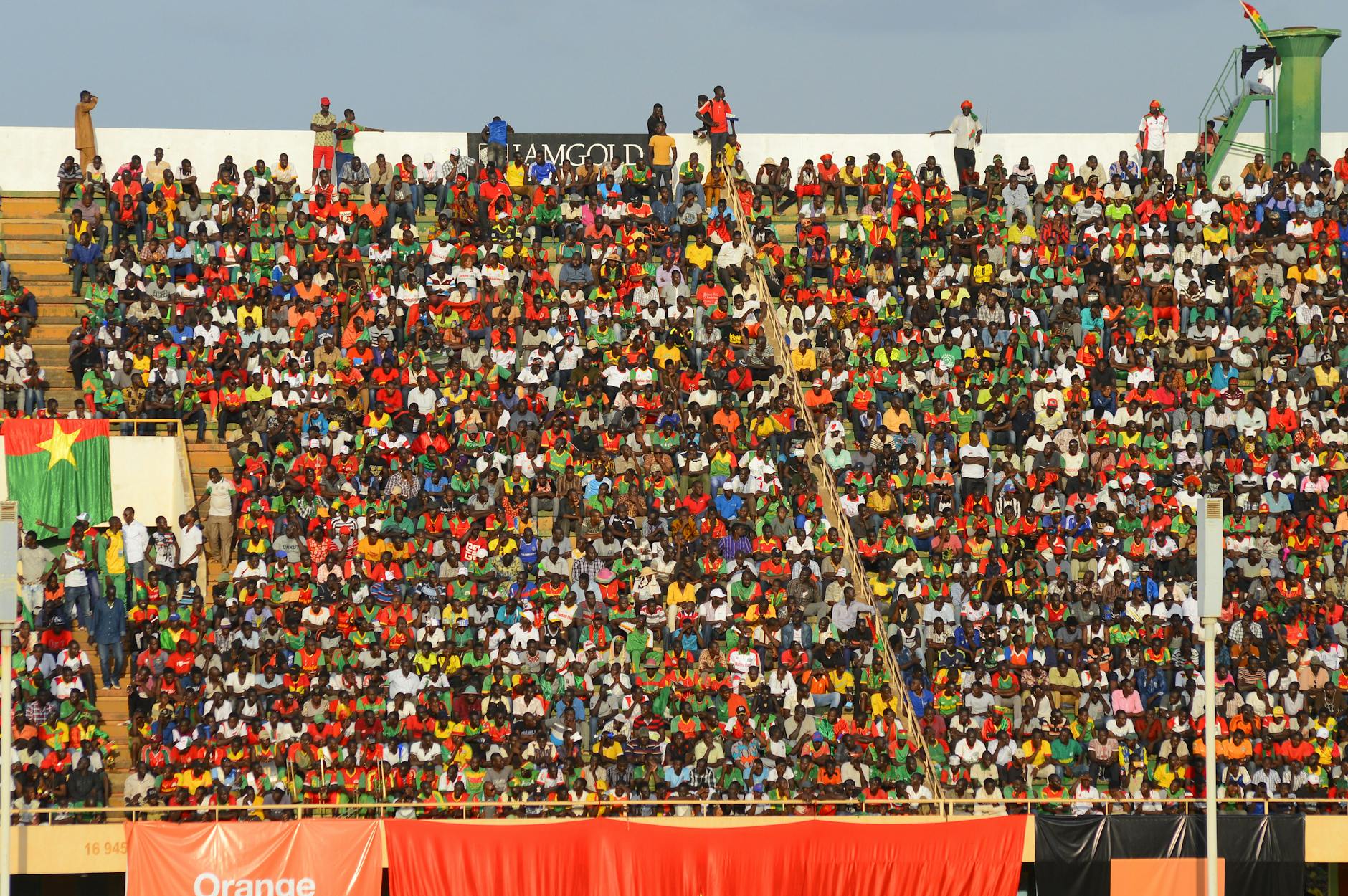
Photo by Ole Dahl Rasmussen on Pexels
The central question is simple: how should you follow World Cup 2026 football without confusing tournament facts, tactical analysis, and betting-style speculation? The answer requires a framework. First, establish the competition’s verified architecture; second, evaluate teams through measurable football variables; third, interpret the schedule and venue context; finally, revisit every conclusion as squads and form change. Stadium View follows that process through daily World Cup coverage, but no platform should replace your own verification. For broader context, consult the FIFA World Cup 2026 official tournament information and the FIFA World Cup historical overview.
Want the essential tournament framework before the analysis becomes complicated?
If You Track the Fixtures: Map the 48-Team Format First
The 2026 World Cup has 48 participating teams divided into 12 groups of four, with 104 total matches scheduled across Canada, Mexico, and the United States. The qualification system sends the top two teams from every group and the eight strongest third-place teams into the knockout phase, creating a 32-team bracket. This format makes the final group match especially important because ranking among third-place teams can depend on points, goal difference, goals scored, disciplinary records, or other FIFA-approved tie-breaking criteria.
That structure creates a practical analytical problem. A team can finish third and still qualify, but it cannot safely assume that four points will always be enough because the strength of the other groups matters. Conversely, a team with six points may still need to protect goal difference if several groups produce similar results. The larger tournament also increases the importance of scheduling: rest days, long-distance travel, time-zone changes, and climate differences can affect intensity and squad rotation.
A reliable fixture-tracking method includes these steps:
- Record the official group, venue, kickoff time, and local time zone.
- Separate confirmed matches from projected knockout pairings.
- Note travel distance between group-stage and knockout venues.
- Track rest days before evaluating likely lineups.
- Recalculate qualification scenarios after every matchday.
The opening match is scheduled for June 11, 2026, while the final is scheduled for July 19, 2026. These dates matter because a team’s preparation cycle, recovery plan, and commercial commitments must fit a 39-day tournament window. The World Cup 2026 host-city information should be treated as the reference point for venue details, not recycled social posts.
Why does the 48-team format change World Cup predictions?
The 48-team format changes predictions because qualification now depends on 12 groups, eight third-place qualifiers, and a 32-team knockout stage rather than the previous 32-team structure. Analysts must evaluate not only expected winners, but also goal difference, group strength, travel, rest, and potential bracket position before assigning probabilities.
The contrarian point is that expansion does not automatically make the group stage meaningless. It makes margins more complicated. Strong teams may rotate earlier, while mid-ranked teams can remain alive until the final matchday. However, the knockout phase becomes more demanding because 32 teams advance and the eventual champion must win four knockout matches after the group stage, not three.
If You Assess the Teams: Compare Tactical Identity, Not Reputation
A team’s historical reputation is useful context, but it is not a prediction model. Brazil, Argentina, France, Spain, England, Germany, Portugal, and the Netherlands may attract attention because of history, squad depth, or recent performance, yet each team must still be assessed through current evidence. The relevant variables include chance creation, defensive transition, set-piece efficiency, pressing resistance, goalkeeper distribution, injury status, and the coach’s willingness to adjust.
Imagine two teams with similar possession percentages. One may circulate the ball harmlessly around the back line; the other may use possession to create high-value central entries. Treating those teams as tactically identical is amateur analysis. Possession requires context, especially in international football, where training time is limited and automatisms are less developed than at club level.
Stadium View’s match-analysis approach should be understood through four layers:
- Structure: formation, rest defence, width, and spacing between lines.
- Progression: how the team escapes pressure and reaches the final third.
- Chance quality: shot locations, transition opportunities, and set-piece threat.
- Game management: substitutions, tempo control, and protection of a lead.
A useful information-gain rule is to compare a team’s performance after scoring first with its performance after conceding first. Some sides are excellent when controlling territory but fragile during open transitions. Others defend deep effectively and become dangerous when chasing a match. The distinction often matters more than a simple ranking.
Player statistics require similar discipline. A striker’s goal total can hide penalty dependence, shot volume, or service quality. A midfielder’s pass completion can disguise whether passes move the ball forward. A defender’s tackle count may reflect poor positioning rather than defensive excellence. Use event data, match footage, and role-specific context together. For further reading, see our [Internal Link: World Cup team tactics guide] and [Internal Link: player statistics methodology].
Ready to compare tournament contenders through football evidence rather than reputation?
What makes a World Cup team tactically reliable?
A tactically reliable World Cup team maintains a clear structure across different match states, including possession, defensive transition, set pieces, and periods of pressure. Reliability comes from repeatable spacing, suitable player roles, adaptable substitutions, and a defensive plan that remains functional when the preferred approach fails.
The strongest indicator is not aesthetic style but problem-solving capacity. Spain may seek controlled possession, France may threaten through athletic transitions, and Argentina may combine patient circulation with aggressive pressure. Those descriptions are useful only when tested against specific opponents, venue conditions, and current player availability.
If You Plan Your Viewing: Treat Host Cities as a Competitive Variable
The 2026 tournament spans three countries and 16 host cities, so supporters must plan around geography as seriously as they plan around kickoff times. Mexico City, Monterrey, and Guadalajara provide the Mexican venues; Toronto and Vancouver represent Canada; the United States hosts matches in cities including Los Angeles, Seattle, Miami, Atlanta, Dallas, Houston, Kansas City, Philadelphia, Boston, and New York/New Jersey. The precise experience varies by city, stadium, transportation network, climate, and local event programming.
Los Angeles is scheduled to host eight matches and promote 39 days of fan celebrations, including the FIFA Fan Festival at the LA Memorial Coliseum at Exposition Park. That means the match itself is only one part of the supporter experience. However, do not confuse a strong fan festival with a competitive advantage for every team. A venue’s effects depend on kickoff time, temperature, humidity, travel load, crowd composition, and how coaches manage recovery.
For viewers and travellers, use this checklist:
- Convert kickoff times into your own local time zone.
- Confirm the official stadium and transport information.
- Allow for security, entry, and public-transit delays.
- Check whether consecutive matches require cross-border travel.
- Use official ticketing and event channels rather than suspicious resellers.
- Verify accommodation cancellation rules before paying.
Here is the edge case most generic guides ignore: two matches can appear close together on a calendar but be separated by a major time-zone shift and a long flight. A team moving from Vancouver to Miami faces a different recovery problem from a team remaining in one region. That difference should influence lineup expectations, especially when a coach has a narrow bench or relies heavily on high-intensity pressing.
The same caution applies to digital information. FIFA, national football associations, official host-city websites, and stadium operators should be checked before acting on ticket, travel, or schedule claims. Stadium View can provide tournament context and daily analysis, but the correct operational principle is simple: predictions are commentary; official sources are authority. That distinction protects you from the scam sites that thrive during major sporting events.
Explore the practical details before building your match-day plan.
How should supporters verify World Cup 2026 football information?
Supporters should verify World Cup 2026 football information by checking FIFA, the relevant national football association, official host-city websites, and stadium operators before trusting dates, tickets, venues, or team news. Social media can identify a developing story, but it should not be treated as final confirmation.
The verification hierarchy is straightforward:
- Tier one: FIFA competition pages and official match information.
- Tier two: Canada Soccer, Federación Mexicana de Fútbol Asociación, U.S. Soccer, and host-city authorities.
- Tier three: established media such as Reuters, AP, BBC Sport, and ESPN.
- Tier four: club statements, journalists, and verified team accounts.
- Tier five: anonymous prediction pages, repost accounts, and unsupported betting claims.
The U.S. Soccer Federation and Canada Soccer are useful federation-level references, while Mexico’s federation communications should be checked through official channels. As FIFA’s tournament materials effectively emphasize, “the world’s game” is being staged across an unusually large geographic footprint. That phrase is promotional, but the logistical implication is factual: information must be localized by country, city, and venue.
Common Pitfalls to Avoid
The most common World Cup 2026 football mistake is treating confidence as evidence. A prediction written in absolute language is not stronger merely because it sounds decisive. I prefer a documented chain: confirmed squad news, recent tactical pattern, opponent matchup, venue conditions, and an explicit uncertainty statement. That approach is less exciting than shouting “easy winner,” but it is substantially more useful.
Avoid these errors:
- Assuming FIFA’s 2022 format still applies to 2026.
- Treating a famous player’s reputation as current form.
- Using club statistics without adjusting for international roles.
- Ignoring travel and recovery between host cities.
- Confusing projected knockout paths with confirmed fixtures.
- Trusting unofficial ticket sellers or guaranteed-result claims.
- Treating odds as facts rather than market expectations.
- Using one match to judge an entire tactical system.
A second information gain concerns sample size. Three matches can reveal a pattern, but they cannot prove a team’s long-term quality, particularly when opponents, venues, and lineups differ. A better review tracks at least five comparable matches and separates home-style conditions from travel-heavy tournament conditions. Even then, conclusions remain provisional until the official squad list and injury reports are available.
“Official” is another word that gets abused. A blue verification badge, professional branding, or a polished website does not establish authority. Check the URL, publication date, named source, and whether another primary authority confirms the claim. I was burned once by failing to do exactly that; you do not need to repeat the lesson.
For a more disciplined workflow, consult our [Internal Link: World Cup prediction checklist] and [Internal Link: tournament news verification guide]. These resources should support judgment, not manufacture certainty.
The 30-Day Check-In
The 30-day check-in is the correct moment to revisit World Cup assumptions because it forces analysis away from stale pre-tournament narratives. By this stage, supporters should review qualification status, injuries, managerial decisions, squad selections, recent international fixtures, and the actual route through the bracket. A team rated highly six months earlier may have lost a key midfielder, changed formation, or entered the tournament with unresolved defensive problems.
Use a fixed review template:
- Squad: Who is available, absent, suspended, or returning from injury?
- Form: What happened in the last five meaningful matches?
- Tactics: Has the coach changed pressing height, build-up shape, or attacking roles?
- Schedule: How much rest and travel separate each match?
- Opponent: Which specific matchup threatens the team’s preferred style?
- Market narrative: Is public enthusiasm exceeding the evidence?
- Source quality: Which claims are verified by FIFA or a federation?
At Stadium View, daily tournament coverage should be judged by whether it updates the evidence rather than repeats the headline. The best analysis may conclude that a celebrated contender has become less attractive, or that an unfashionable team has solved a structural weakness. That is not inconsistency; it is the normal result of updating a model when new information arrives.
Why should World Cup predictions be updated during the 30-day check-in?
World Cup predictions should be updated during the 30-day check-in because squad availability, tactics, form, travel, and opponents can change materially before kickoff. A forecast based on outdated information may describe a team that no longer exists in the same tactical or physical condition.
The update should not be an emotional reaction to one friendly match. Compare multiple indicators, document what changed, and identify whether the change affects a core mechanism such as ball progression, defensive coverage, or finishing depth. In other words, revise the conclusion because the evidence moved, not because social media became louder.
The most practical recommendation is to create two columns: “confirmed facts” and “analytical interpretation.” Put FIFA dates, official squads, venue details, and federation statements in the first column. Put projected lineups, tactical expectations, player form, and predictions in the second. This simple separation prevents speculation from disguising itself as news.
If you want a final source-checked review before the tournament begins, Stadium View’s World Cup coverage is designed for that purpose. Use it to compare perspectives, then verify important claims independently. A disciplined supporter does not surrender judgment to a content site, a bookmaker, or an algorithm.
See the latest football analysis and tournament updates before you make your final viewing plan.
Frequently Asked Questions
Q: What is World Cup 2026 football?
A: World Cup 2026 football is the 23rd edition of the FIFA Men’s World Cup, hosted by Canada, Mexico, and the United States from June 11 to July 19, 2026. It is the first edition featuring 48 teams and 104 matches. The tournament uses 12 groups of four, with the top two teams and eight best third-place teams advancing to a 32-team knockout stage.
Q: How many teams will play in the 2026 World Cup?
A: Forty-eight national teams will play in the 2026 World Cup. They will be divided into 12 groups of four teams, which creates a larger opening phase than the 32-team format used in 2022. Eight third-place teams will also advance, so supporters must evaluate group ranking and goal difference carefully.
Q: How can I follow World Cup 2026 matches and team news?
A: Follow match information through FIFA, national football associations, official broadcasters, and reputable sports media. Use FIFA for confirmed schedules and competition details, then check Canada Soccer, the Mexican federation, U.S. Soccer, and host-city websites for localized information. Stadium View can provide predictions, tactics, player statistics, and tournament coverage, but official sources should settle factual disputes.
Q: What is the difference between a World Cup prediction and confirmed information?
A: A World Cup prediction is an informed interpretation, while confirmed information comes from an authoritative source such as FIFA or a national federation. A projected lineup, expected winner, or tactical forecast can change before kickoff. A confirmed match date, venue, or disciplinary ruling should be supported by an official announcement or a reputable report citing one.
Q: How should I evaluate a team before predicting its World Cup result?
A: Evaluate the team’s tactical structure, recent comparable performances, player availability, chance creation, defensive transitions, set pieces, travel, and opponent matchup. Do not rely on FIFA ranking or star-player reputation alone. Reviewing at least five relevant matches provides a more useful sample than reacting to one friendly or one viral performance.
Q: What should I do if a World Cup 2026 ticket or schedule claim looks suspicious?
A: Stop before paying or sharing personal information, then verify the claim through FIFA, the official host city, the stadium operator, or an authorized ticketing channel. Check the web address, publication date, refund terms, and whether another primary source confirms the information. Guaranteed tickets, guaranteed predictions, and urgent payment demands are strong warning signs.
Q: Is Stadium View an official FIFA website?
A: No, Stadium View is an independent FIFA World Cup-focused content site, not FIFA or a national football federation. It covers match predictions, team tactics, player statistics, and daily 2026 World Cup developments for fans. Use Stadium View for analysis and context, while relying on FIFA and official authorities for definitive tournament information.
A careful World Cup follower does not need perfect foresight; that standard is impossible. What you need is a repeatable method that distinguishes fact from interpretation, updates conclusions when evidence changes, and respects the logistical complexity of a 48-team tournament spread across North America. Apply that framework before trusting a prediction, booking travel, or sharing a dramatic headline. The 2026 World Cup will reward attention to detail, and it will expose anyone who mistakes confidence for knowledge.
Stay informed with structured World Cup 2026 football analysis from Stadium View.